
Satélite
Sound art festival
Valenzuela Klenner Gallery
Bogotá – August 2014
In alliance with
Valenzuela Klenner Gallerty (Colombia)
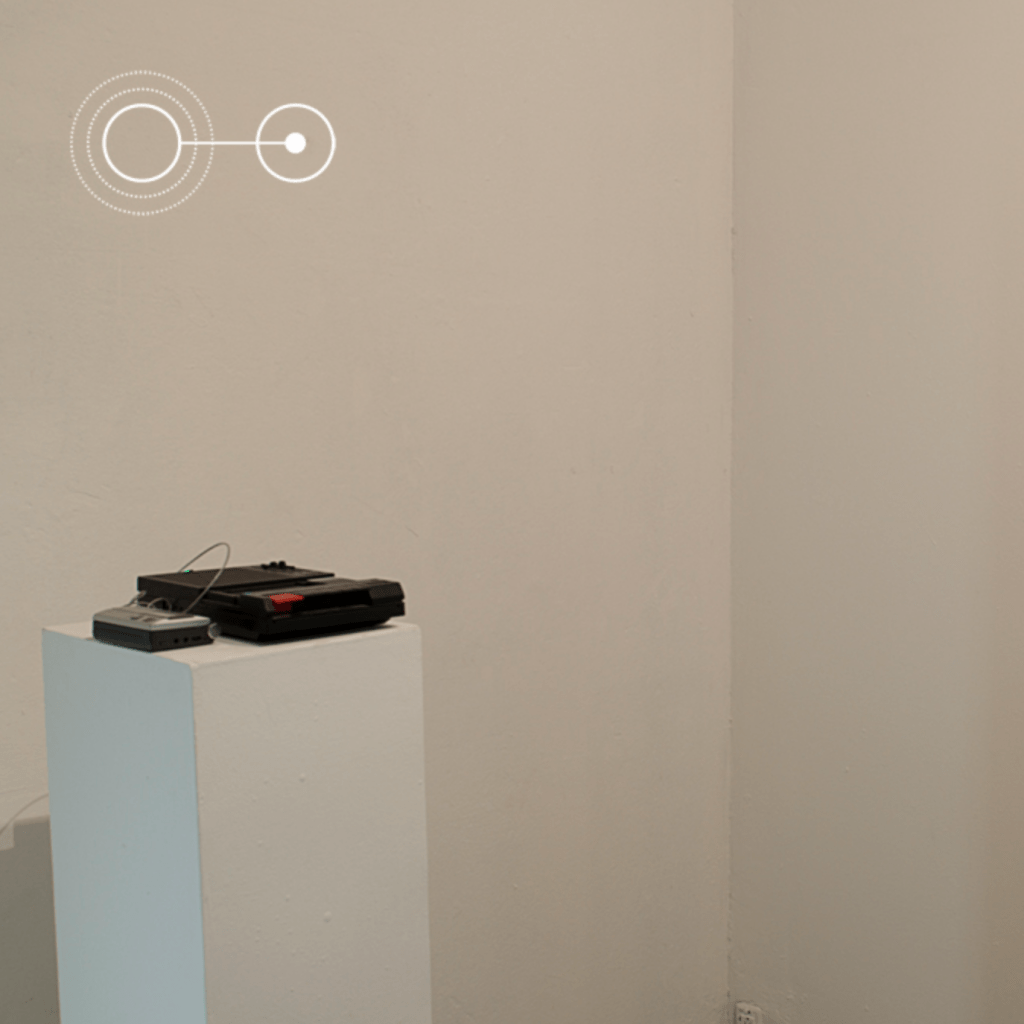
Initially, a series of international and local sound artists of special relevance and validity in their field were invited to send plans, in the case of the installations, and scores, for the concerts, using standard and preferably obsolete objects and materials and recyclables will propose a work to be carried out in Colombia. The installations were made within an Installations Workshop and the compositions were performed at concerts by a group of Colombian artists that included Federico Demmer, Ricardo Arias, Robero García P and Nobara Hayawaka.
Collaboration and exchange between international and local artists, and local interpreters and workshops was an essential theme within the proposal. When forced to present their works in terms of obsolete and recyclable objects (very common in the Colombian sound artistic endeavor), foreign artists were in some way obliged to work under Colombian production conditions, which not only initially raised a challenge but a dialogue between different artistic production systems determined by essentially economic variables.
The production of the works took place in several stages where different actors intervened in the process of conception and materialization where it started from a mainly visual reference that was acquiring in the process a given sound that arises, in part, due to the high level of interpretation and noise that the process presented. This is a theme that we find particularly poetic within the proposal, where ideas and expectations took shape from the visual to the sound and where the work always acquired an unpublished character precisely because of that space that from the proposal was given to what interpretative.
The idea of working with easily accessible technology takes elements from the DIY (do it yourself) and ‘low tech’ (obsolete technology) production culture focused specifically on the subject of sound.
The DIY and low tech methods focus on three basic premises: low costs, learning within the production process and a critical attitude towards consumerism where the action of recycling acquires not only an economic but also an ethical nuance.
During the last fifteen or twenty years in art and in other lines of creation, DIY and low tech have acquired quite significant relevance, allowing ambitious ideas in their technical aspect to be developed at very low costs. For example ‘Do it’ (do it) is an inactive curatorial by Hans Ulrich Obrist focused on holding exhibitions in different countries where the works are presented as executable instructions, thus facilitating their logistics and exhibition. The ‘Do it’ project has already completed more than twenty years presenting and managing exhibitions in countries as diverse as China, Denmark, Slovenia and Uruguay.
In Colombia, the DIY and low tech culture has had a very special importance precisely because of the economic conditions under which artistic production works. We can mention some works by artists such as Hamilton Mestizo, Carlos Bonil, Miguel Kuan and Alejandro Tamayo in relation to these production methods.


https://satelitevk.wordpress.com/
https://sateliteartesonoro.bandcamp.com/
 habitatsonoro